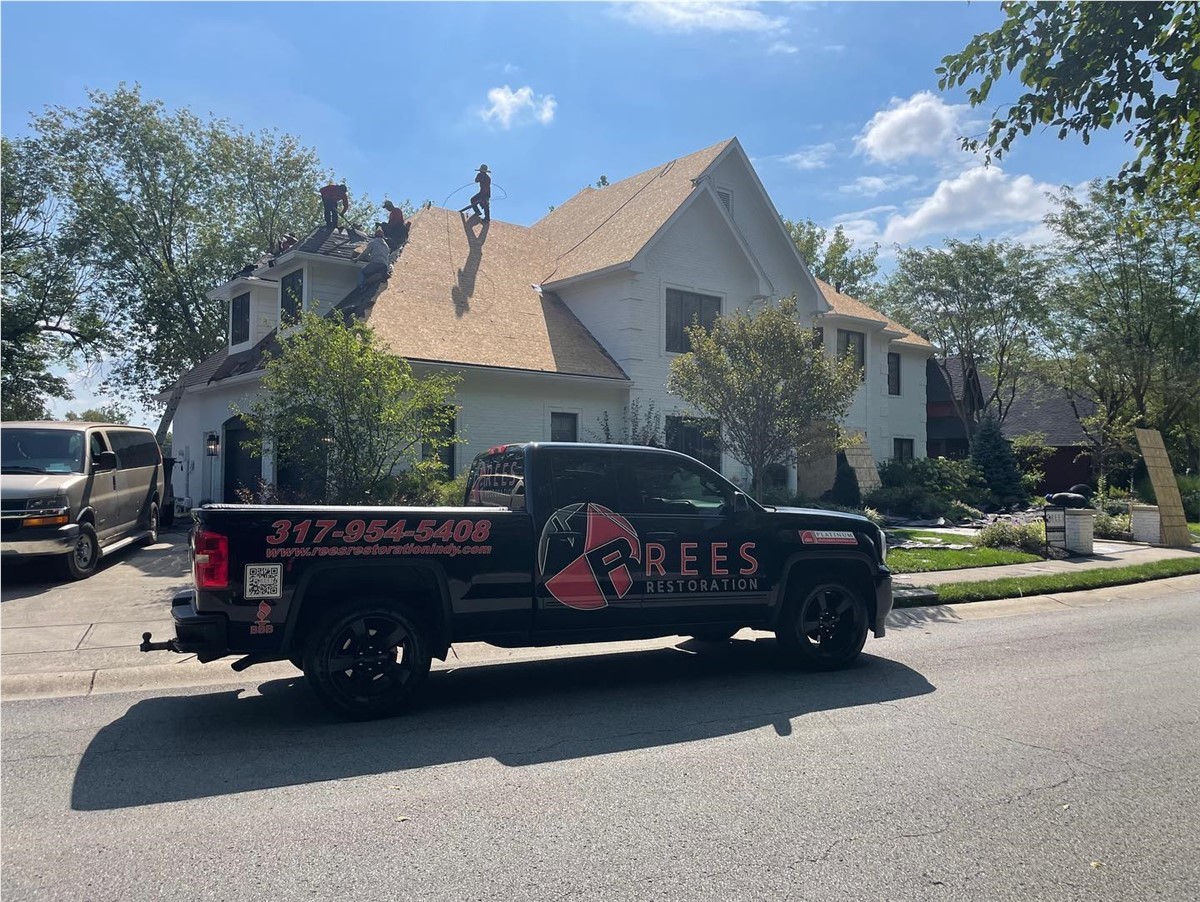
Most asphalt shingle roofs in Indiana last between 20 and 30 years, but weather, ventilation, installation quality, and maintenance all affect their lifespan. That means two roofs installed in the same year can age very differently based on how they were built and cared for.
For homeowners with roofs that are 10 to 25 years old, it is smart to start planning before problems become urgent. At Rees Restoration, we help Indiana homeowners understand roof lifespan Indiana factors, spot warning signs, and decide when Indiana roof replacement may be the best long-term choice.
Average Roof Lifespan by Material
The answer to “how long does a roof last?” depends first on the roofing material. Asphalt shingles are common across Indiana because they offer strong value, but other materials may last longer in the right conditions.
Roofing Material | Expected Lifespan |
|---|---|
3-tab asphalt shingles | 15 to 25 years |
Architectural asphalt shingles | 20 to 30 years |
Premium asphalt shingles | 25 to 40 years |
Metal roofing | 40 to 70 years |
Slate roofing | 50+ years |
Tile roofing | 50+ years |
The asphalt shingle lifespan can also depend on the roof slope, sun exposure, attic airflow, and storm history. A roof with strong installation and proper ventilation may last longer than one exposed to repeated wind, hail, and moisture issues.
How Indiana Weather Affects Roof Lifespan
Indiana roofing systems face a wide range of weather. Summer heat, heavy rain, hail, strong wind, snow, ice, and freeze and thaw cycles can all wear down a roof over time. Shingles expand and contract as temperatures change, and that movement can lead to cracking, curling, or granule loss.
Storm exposure is another major factor. Even if a roof does not leak right after a storm, hail or wind can weaken shingles and shorten their life. Over time, small areas of damage may turn into bigger problems. That is why it is wise to schedule an inspection after major storms, especially if your roof is already more than 10 years old.
Why Ventilation and Maintenance Matter
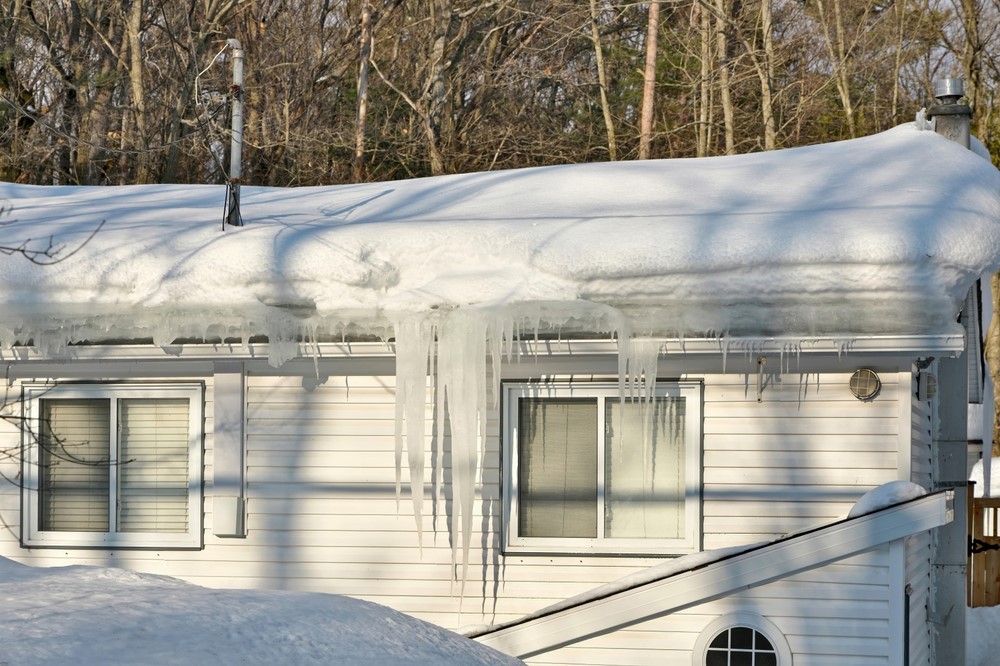
Proper attic ventilation helps protect the roof from the inside out. When heat and moisture become trapped in the attic, shingles may age faster, and the roof deck may be at risk for moisture damage. Good ventilation can also help reduce ice dam concerns in winter.
Maintenance also plays a key role. Homeowners can extend roof life by keeping gutters clear, trimming branches away from the roof, checking for missing shingles, and watching for signs of leaks. A professional inspection can find issues that are easy to miss from the ground.
Regular roof care should include:
- Clearing leaves and debris from gutters
- Checking ceilings and attic spaces for water stains
- Looking for missing, loose, or lifted shingles
- Trimming tree limbs that touch or hang over the roof
- Inspecting flashing around chimneys, vents, and skylights
- Scheduling inspections after strong wind or hail
- Addressing small repairs before they spread
These steps can help your roof perform better and may delay the need for full replacement.
Warning Signs Your Roof May Be Near the End
Age is important, but condition matters more. A 15-year-old roof with poor ventilation or storm damage may need replacement sooner than a 25-year-old roof that has been well maintained.
Watch for warning signs such as curling shingles, cracked shingles, missing granules, dark streaks, soft spots, sagging areas, repeated leaks, or loose flashing. If you notice water stains on ceilings or walls, the roof may already be allowing moisture into the home.
Frequent repairs are another sign that replacement may be the better investment. If you are fixing new issues every season, continuing to repair an aging roof may cost more over time than planning a full replacement.
When to Start Planning for Indiana Roof Replacement
Summer is a popular time for roof replacement projects because weather conditions are generally favorable and many homeowners want the work completed before fall and winter. If your roof is between 10 and 25 years old, summer is a good time to schedule an inspection and learn where things stand.
You may not need immediate replacement, but knowing your roof’s condition helps you budget and plan. If your roof has several years left, maintenance may be enough. If it is showing widespread wear, replacement may help prevent emergency leaks and interior damage later.
Find Out How Much Life Your Indiana Roof Has Left
Understanding roof lifespan in Indiana helps you make smarter decisions about repair, maintenance, and replacement. Weather, ventilation, storm exposure, installation quality, and ongoing care all affect how long your roof will protect your home.
Rees Restoration helps Indiana homeowners evaluate roof condition and choose the right next step. Whether you need a repair, storm damage inspection, or full roof replacement, our team can help you plan with confidence. Find out how much life your roof has left with a professional inspection.
Tags
Subscribe to Rees Restoration's Blog



Comments